
The MSME 45-day payment rule: what every business owner should know
Quick answer
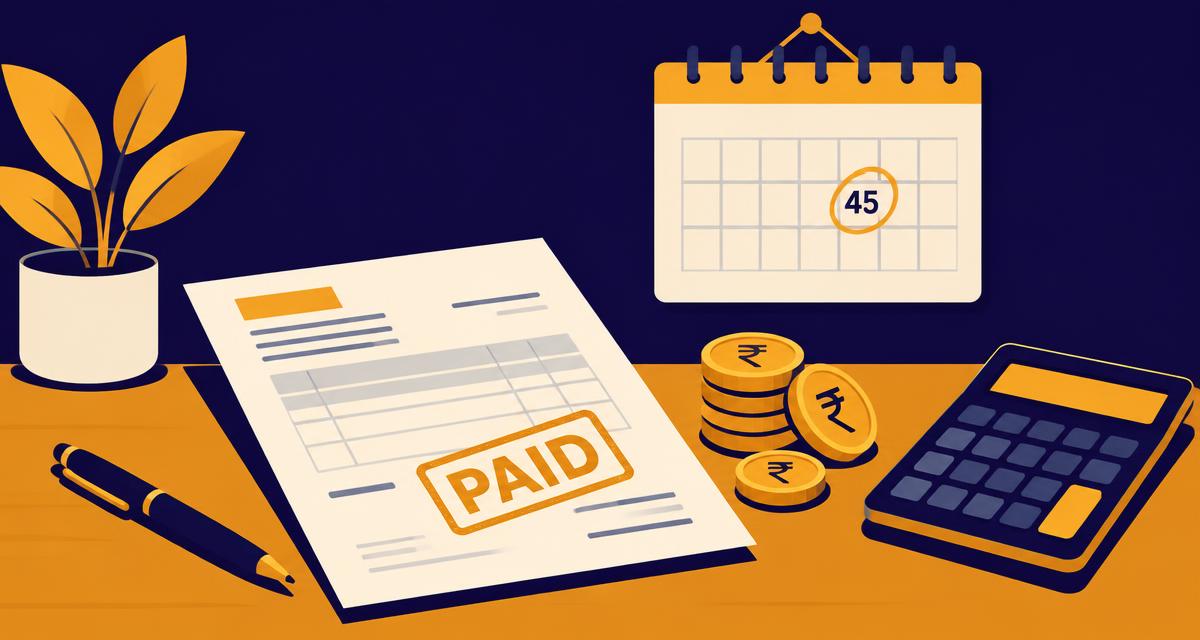
If you buy from a micro or small enterprise, pay within the agreed period — never more than 45 days, or 15 days if there is no written agreement. If you pay late, Section 43B(h) lets you claim that expense for tax only in the year you actually pay it.
"Sir, my customer says he will pay after 90 days. What can I do?"
Small business owners ask me this all the time. They deliver the goods. They raise the invoice. Then they wait. And while they wait, they pay salaries, rent and GST from their own pocket.
The law already gives small suppliers some protection. Many owners simply do not know it. So let me explain it in simple words.
What is the 45-day rule?
It comes from the Micro, Small and Medium Enterprises Development Act, 2006 (the MSMED Act). Section 15 says a buyer must pay a micro or small supplier by the agreed date. That agreed period cannot be longer than 45 days from the day the buyer accepts the goods or services.
If there is no written agreement on payment terms, the buyer must pay within 15 days.
Why everyone started talking about Section 43B(h)
The rule was there for years. But late payment was common. So the Finance Act, 2023 added clause (h) to Section 43B of the Income-tax Act, 1961. It applies from the financial year 2023-24.
Now, if a buyer does not pay a micro or small supplier on time, the buyer cannot claim that purchase as an expense in that year. The deduction is allowed only in the year the money is actually paid.
In simple terms: paying an MSME late can increase the buyer's tax bill for the year. That got the attention of a lot of finance teams.
The Income-tax Act, 2025 replaces the 1961 Act from 1 April 2026, so section numbers may be different for newer years. Check the current position with your chartered accountant.
Who is covered — and who is not
Covered
- Payments to micro and small enterprises.
- Suppliers registered on the Udyam portal (manufacturers and service providers).
Not covered
- Medium enterprises.
- Retail and wholesale traders, as government guidance says their Udyam registration is only for priority-sector lending.
A simple example
This is an illustration, not data from a real business.
A company buys ₹10 lakh of parts from a small manufacturer on 1 March 2026. They agreed on 45 days in writing. The due date is about mid-April.
If the company pays by that date, the ₹10 lakh is a normal expense. If it pays only in June, the expense for that ₹10 lakh moves to the year in which it is paid. Plus, under the MSMED Act, the supplier can claim interest for the delay.
What happens if a buyer pays late?
- The buyer owes compound interest with monthly rests at three times the RBI bank rate (Section 16, MSMED Act).
- That interest is not allowed as a tax deduction (Section 23, MSMED Act).
- The supplier can file a case on the MSME Samadhaan portal or approach the state MSME Facilitation Council.
6 things to do this month
1. Ask every supplier: are you micro, small or medium?
Collect their Udyam certificate. Keep a simple list in a sheet.
2. Write the credit period on the purchase order
Agree a period of 45 days or less in writing. Without an agreement, the limit is 15 days.
3. Mark the due date the day you accept the goods
The clock starts from the day of acceptance, not the day you remember the invoice.
4. Plan cash before 31 March
Unpaid MSME dues at year end can push up the buyer's tax for that year. Check them in February, not on 30 March.
5. If you are the supplier, register on Udyam
Put your Udyam number and your payment terms on every quotation and invoice.
6. If you are the supplier, follow up politely and early
Remind before the due date. Most buyers now want to pay MSMEs on time.
The bigger lesson: your cash is your oxygen
A rule can help you collect faster. But it cannot run your business for you. You still need to know how many days your money stays with customers. Read how to calculate and reduce debtor days, then try the free cash conversion cycle calculator.
For the full picture, see the cash flow management guide for MSMEs and working capital management.
My simple rule is Track. Control. Scale. Track who owes you and whom you owe. Control the terms in writing. Then scale.
Frequently asked questions
What is the 45-day rule for MSME payments?
Under the MSMED Act, 2006, a buyer must pay a micro or small supplier within the agreed period, and that period cannot be more than 45 days from accepting the goods or services. If there is no written agreement, the limit is 15 days.
What does Section 43B(h) do?
Section 43B(h) of the Income-tax Act, 1961, applies from the financial year 2023-24. If a buyer does not pay a micro or small enterprise within the MSMED Act time limit, the buyer can claim that expense as a tax deduction only in the year it is actually paid.
Does the rule cover medium enterprises?
No. Section 43B(h) covers payments to micro and small enterprises only. Medium enterprises are not covered.
Does my supplier need Udyam registration?
Yes, in practice. The supplier should be registered on the Udyam portal as a micro or small enterprise. Ask suppliers for their Udyam certificate and keep a copy.
Are traders covered?
Government guidance has said that retail and wholesale traders registered on Udyam are covered only for priority-sector lending, so payments to them are generally treated as outside the 45-day rule. Confirm your case with your chartered accountant.
What if the buyer pays late?
The MSMED Act says the buyer must pay compound interest with monthly rests at three times the bank rate notified by the RBI, and that interest is not allowed as a tax deduction. The supplier can also approach the MSME Samadhaan portal or the state MSME Facilitation Council.
Want clarity over your cash and payments?
In Fortune Business Hub's complimentary LIVE Finance Masterclass, I walk MSME owners through receivables, payables, profit and cash flow in simple language.
Save my seat for the Finance MasterclassClarity Creates Cashflow.
Coach Dhejo — Founder, Fortune Business Hub. On a mission to financially empower 1 million entrepreneurs.